


Wisdom teeth
What are wisdom teeth?
The term wisdom teeth refers to the third molars, which usually erupt between late adolescence and early adulthood. They sit at the end of the row of teeth in the upper and lower jaw. In many cases, however, the jaw is too small to provide enough space for the wisdom teeth. This can lead to misalignment, crowding, recurring inflammation or pain.
The frequency of problems associated with wisdom teeth has increased markedly in recent years. Many people feel uncertain when wisdom tooth removal or wisdom tooth surgery is recommended. At our practice for oral, maxillofacial, facial and plastic surgery in the Zurich / Lake Zurich region, we offer you the highest medical expertise and care based on scientific excellence. Particularly in the sensitive jaw and facial area, specialised treatment is crucial to eliminate complaints in the long term while preserving both function and aesthetics (e.g. avoiding resulting dental crowding).
Forms of wisdom tooth problems
Not every wisdom tooth needs to be removed. They mainly become problematic when they:
- remain in the jawbone (impacted wisdom teeth)
- erupt only partially (partially impacted wisdom teeth)
- lie at an angle or press on or damage adjacent teeth (resorption) (displaced wisdom teeth)
- cause the formation of cysts
- cause recurring inflammation of the gums
- promote decay on the wisdom tooth or the adjacent molar

Such situations can lead to pain, swelling, restricted jaw opening (trismus), abscesses or even the formation of cysts. An early, well-founded assessment by an experienced oral and maxillofacial surgeon is important to avoid consequential damage and to determine the appropriate treatment – from monitoring to surgical removal.
Statistically, wisdom teeth cause problems in around 80% of the general population over the course of a lifetime. In some cases, however, wisdom teeth have fully erupted, are correctly positioned in the row of teeth and can be cleaned without difficulty. Such wisdom teeth can often be left in place under close monitoring, provided no complaints, inflammation or carious defects occur.
Nevertheless, regular dental and radiological check-ups are important, as problems often develop gradually. Using modern imaging and clinical criteria, our specialists assess whether a “wait and see” approach is medically justifiable or whether prophylactic removal appears advisable – for example, in the case of planned orthodontic treatment or existing crowding.
Complex wisdom tooth situations arise when the teeth are deeply displaced within the bone, lie in the immediate vicinity of important nerve structures (e.g. the inferior alveolar nerve) or the roots have an anatomically demanding shape. In such cases, wisdom tooth surgery performed by an experienced oral and maxillofacial surgeon is particularly important.
Our specialists have many years of surgical experience and scientific expertise in the removal of complicated wisdom teeth. Using modern, low-radiation 3D imaging (Planmeca Viso® G7), we plan the procedure precisely in advance to keep the risk of nerve injuries, jaw fractures or other complications as low as possible. The aim is always safe removal with maximum preservation of bone, soft tissue and nerves.
A special case: wisdom teeth in the lower jaw and in the sensitive facial area
Wisdom teeth in the lower jaw place particular demands on diagnostics and treatment, as they often lie in the immediate vicinity of sensitive nerve pathways responsible for the sensation and function of the lower lip and chin. Similar particularities arise with wisdom teeth near the maxillary sinus in the upper jaw.
Our many years of expertise in oral and maxillofacial surgery ensure not only a functionally and anatomically safe tooth removal, but also gentle treatment of the surrounding structures. We use the latest microsurgical and minimally invasive techniques (e.g. piezosurgery or similar) to reduce swelling and discomfort, minimise the risk of nerve irritation and enable rapid, aesthetically inconspicuous healing.
Diagnostics and treatment planning: the key to success
Sound diagnostics are the decisive step for safe and gentle wisdom tooth removal. It begins with a thorough clinical examination, assessing tooth position, mouth opening, mucous membrane and bite. This is supplemented by radiological clarification, typically using modern low-radiation 3D CBCT imaging.
On the basis of these examinations, we create an individual treatment plan:
- Do the wisdom teeth need to be removed immediately, or is monitoring sufficient?
- Is a simple “wisdom tooth extraction” possible, or is surgical wisdom tooth removal necessary?
- Which type of anaesthesia is appropriate (local anaesthesia, twilight sedation or collaboration with an anaesthesia team)?
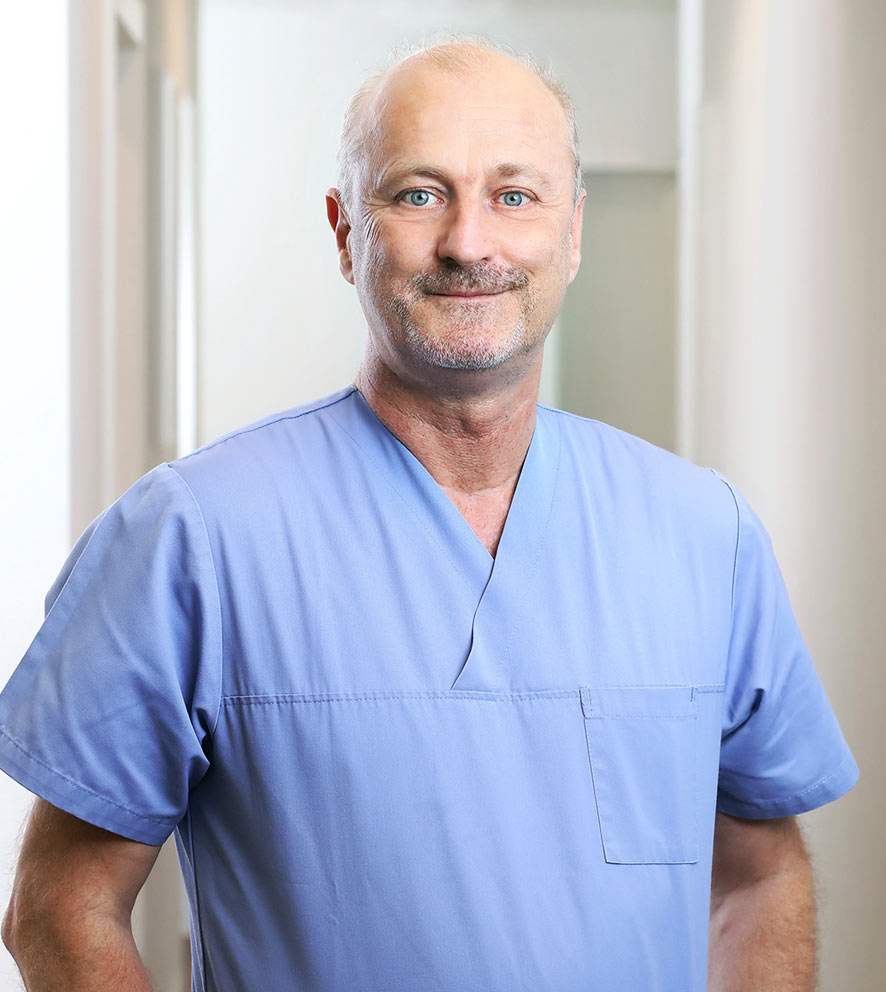
We take the time to discuss all findings and options with you calmly. This way you know exactly what to expect, what risks exist and how best to prepare for the procedure.
Therapeutic excellence in wisdom tooth surgery
The treatment of wisdom teeth depends on their position, eruption status, anatomical particularities and the patient’s general state of health. In many cases, a simple extraction under local anaesthesia is sufficient. For deeply displaced or complicated wisdom teeth, however, a specific surgical wisdom tooth procedure is required.
At our practice for oral, maxillofacial, facial and plastic surgery in the Zurich / Lake Zurich region, the focus is on surgical procedures in which safety, precision and preservation of the tissue take top priority. Our surgeons have many years of experience in dental surgery and in complex reconstructive techniques of oral and maxillofacial surgery. We work according to the latest scientific guidelines and combine these with the most advanced surgical techniques to provide you with:
- The shortest possible procedure time
- Controlled and manageable wound healing
- Minimal postoperative pain and swelling
- a quick return to everyday life
Structured aftercare with clear behavioural recommendations and follow-up appointments is, of course, part of our treatment concept.
The cost of wisdom tooth surgery
The cost of extracting or surgically removing wisdom teeth in Switzerland depends on several factors:
- The number of wisdom teeth to be removed
- The degree of difficulty (e.g. position within the bone, proximity to the nerve)
- The type of procedure (simple extraction vs. complex wisdom tooth surgery)
- The type of anaesthesia (local anaesthesia, twilight sedation, general anaesthesia),
- Any necessary pre- and post-operative examinations
We place great value on transparency. Before treatment, you will receive an individual cost estimate. We will gladly clarify with you to what extent your basic insurance or supplementary insurance will contribute to the costs.
Why you should choose our expertise
Specialisation:
Experience:
Interdisciplinarity:
Precision:
Aesthetics and function:
We take our time:
Your next step
If you or a family member are experiencing problems with your wisdom teeth – such as pain, recurring inflammation, swelling, or your dentist has advised that wisdom tooth surgery is necessary – please do not hesitate to contact us.
In a personal consultation, we analyse your individual situation, explain the findings to you in an understandable way and show you the best possible treatment options – from a simple wisdom tooth extraction to complex surgical wisdom tooth removal.
What makes the difference:
Over the years we have developed surgical methods (in particular preservation of the blood supply through the periosteum, a good soft-tissue seal around the tooth and minimal bone trauma) that allow wisdom teeth to be removed surgically through a minimal soft-tissue access, thereby avoiding surgical side effects such as swelling and bleeding, periodontal pocket formation, or maxillary sinus fistulas.
Through special surgical planning (e.g. CBCT) and the use of modern techniques (piezosurgery, etc.), we avoid extensive bone loss, which can lead to an increased risk of jaw fracture and nerve damage.
With considerably shortened operating times and reduced surgical side effects, we can gently remove all (usually four) wisdom teeth in a single session.